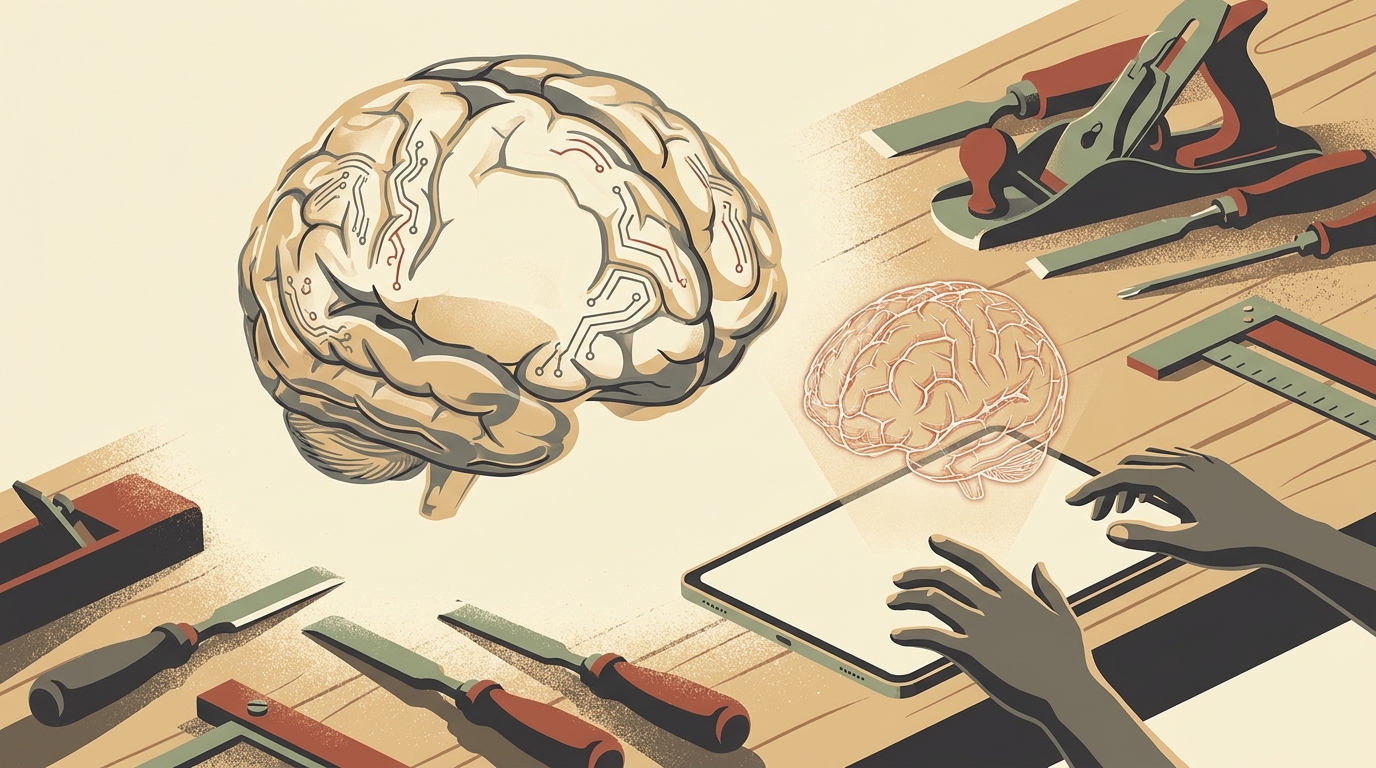
When Trust Replaced Trustworthiness
I. The question of the week
Every few weeks the release notes arrive: a larger context window, a higher benchmark, a new frontier model, an open-weights competitor that runs on a laptop, a “best-of” roundup that is obsolete before the month turns. Alongside them, quieter and less celebrated, arrive the vulnerability trackers — the jailbreaks, the prompt injections, the leaked training data, the model that confidently invents a citation. The two streams run in parallel and rarely touch. The launches accelerate; the safety questions they raise stay open. This is the topic of the week: the widening gap between how many models we ship and how much any of them can be trusted.
The interesting thing is not the gap itself, which is obvious, but what the conversation did with it. Over three years the discourse around AI and trust performed a substitution so smooth that most participants did not notice it happening. It began, in early 2025, with a critical question — can these systems be trusted, and how would we know? It ended, by 2026, having quietly answered a different and easier one: how do we get people to use them? Trustworthiness, a measurable property of a system, was displaced by trust, a manageable perception of a user. The vulnerability trackers kept filling. The adoption studies multiplied faster.
The arc has one clear inversion point, and this essay is about that hinge — the quarter when critical framing gave way to optimistic framing, and the language of safety was absorbed into the language of growth. What follows traces the rhetoric through time, then the reality through time, and then asks where the two met and where they missed. The short version of the argument: proliferation did not solve the trust problem. It made the trust problem cheaper to talk around.
II. What we’ve been saying
At the start of 2025 the conversation still carried a genuine question in it. “Engineering Trust in the Heart of AI,” published in March, drew a distinction that would turn out to be the most important idea in the entire arc and then be steadily forgotten: the difference between trust, “a belief shaped by perception,” and trustworthiness, “measurable qualities like consistency, transparency, and accountability” — see Engineering Trust in the Heart of AI. Hold that distinction in mind, because almost everything that follows is the story of it collapsing.
Even in that first quarter the collapse had already begun in the research literature. The dominant genre was not the safety audit but the adoption study, and its instrument of choice was some variant of the Technology Acceptance Model or the Unified Theory of Acceptance and Use of Technology. In these papers trust appears, but not as a property to be verified — as a variable to be measured for its effect on use. “Determinants of ChatGPT Adoption Intention in Higher Education” treats trust and risk as “mediating roles” in the pathway to acceptance (Determinants of ChatGPT Adoption Intention in Higher Education). A parallel study of Egyptian academics folded “perceived ethics” and “academic integrity” into an integrated model whose dependent variable is, in the end, adoption (What motivates academics in Egypt toward generative AI tools?). The framing is subtle and consequential. When trust becomes a predictor of usage, distrust stops being possible evidence that something is wrong with the system and becomes friction to be reduced.
The corporate register said this outright. “If You Want Your Team to Use Gen AI, Focus on Trust,” Deloitte researchers advised in January, having diagnosed that workers weren’t using the tools because they didn’t trust them — a problem defined entirely from the deployer’s side of the table (If You Want Your Team to Use Gen AI, Focus on Trust). The reader is invited to notice whose problem low trust is here. Not the user who might be right to hesitate. The company whose rollout has stalled.
Then, sometime in the second quarter of 2025, the tone flipped. Where the first quarter had leaned critical, the spring turned decisively optimistic, and the vocabulary shifted with it. Trust stopped being a hurdle and became an opportunity. The Digital Trust Summit produced “Navigating the Future of Trust, Risk, and Opportunity in the Age of AI,” where for marketers “AI promises a leap” and trust is one more axis of competitive positioning (Navigating the Future of Trust, Risk, and Opportunity in the Age of AI). The academy supplied its own optimism: “Ten Provocations on AI, Trust, and the Future of Communication” gathered “conversations, provocations, and prophecies” into a boom-era synthesis (Ten Provocations on AI, Trust, and the Future of Communication). The enterprise press moved on to the next unbuilt thing entirely — “The Rise Of Agentic AI,” where the barriers to trusting autonomous systems are cast as obstacles “enterprises must overcome,” not reasons to slow down (The Rise Of Agentic AI–3 Big Barriers Enterprises Must Overcome).
By late 2025 the substitution was complete enough to be theorized. “The confidence gap: why AI’s next frontier is trust” named trust as the field’s next commercial territory — a frontier to be settled, which is to say monetized (The confidence gap: why AI’s next frontier is trust). And in July 2026 the arc reached its logical terminus in the Harvard Business Review, which announced that “Responsible AI Is Becoming a Growth Strategy” and that trust “is emerging as a critical competitive advantage” (Responsible AI Is Becoming a Growth Strategy). Responsibility, in that sentence, is no longer an obligation owed to the person the system acts upon. It is an asset owned by the firm.
What was lost in the migration is exactly what James Williams warned would be lost. Writing in Stand Out of Our Light, Williams argued that surface debates, “while important, have distracted us from demanding transparency about the design logic — the ultimate why — that drives the products and services we use,” with the result that “we’ve had minimal and shaky bases for trust” (Stand Out of Our Light - James Williams). The trust-as-growth-strategy literature is precisely this distraction at scale. It measures whether people trust, engineers the conditions under which they will, and never once requires the system to earn it. The move is old enough to have a grammar. As the analysis of professional language in Discourse and Practice observes, “in the age of professionalism, expertise has acquired authority in many domains of activity that had previously been the province of families” (Discourse_and_Practice) — and the machinery of AI trust research is busy transferring judgment about whether a tool is safe from the person using it to the vendor selling it a trust framework.
III. What’s been happening
While the language migrated toward growth, the underlying reality moved in a straighter and less flattering line: the models kept multiplying, and the trust question kept not being answered. The proliferation is the fact everyone acknowledges and no one dwells on — successive frontier releases, open-weights alternatives, and roundup after roundup ranking systems that change beneath the ranking. And here the arc’s own literature supplies an uncomfortable diagnostic. In The Ethical Algorithm, the authors explain the multiple comparisons problem: when you run an experiment many times, “if you are reporting some event, then (absent fraud) it must have happened at least once during your k tries,” which is why honest statistics multiply the reported improbability by the number of attempts — the Bonferroni correction (The Ethical Algorithm - The Science of Socially Aware). Model proliferation is a multiple comparisons problem wearing a product roadmap. Ship enough models, benchmark them enough ways, and some configuration will look trustworthy by the arithmetic of many tries. The launch cadence manufactures the appearance of progress on trust without the underlying quantity — measured trustworthiness — having moved at all.
Meanwhile the demand side did something the optimism did not predict. Where hands-on use was actually studied over time, trust did not rise on contact; it recalibrated downward. The most instructive single document in this arc is a longitudinal study of Microsoft 365 Copilot adoption across an eight-month deployment at a state department of transportation, which found that employee expectations underwent “expectation recalibration” after real use — the honeymoon framing giving way to something soberer once the tool met the work (Persona Migration and Expectation Recalibration in Generative AI Adoption). This is the datum the growth-strategy literature cannot easily absorb: familiarity did not deepen trust so much as correct it. People trusted the systems more accurately after using them, which is not the same as trusting them more.
The classroom told a version of the same story. A study of AI in higher education found adoption to be “a sociotechnical process shaped by individual perceptions, interpersonal networks, and institutional contexts” rather than a simple function of the technology’s availability (AI in higher education: Trust, risk, and institutional support shape teachers’ digital literacy), while a design-research team building a trust framework for human-AI collaboration conceded that trust “is critical for effective human-AI collaboration” precisely because it was proving so hard to establish (Co-intelligence in design: the importance of trust in artificial intelligence). When we examined the AI literacy discourse in our briefing of [week-2025-06-08], the recurring promise was that better-equipped users would navigate an AI-driven world through critical thinking; what these deployment studies show is that critical thinking, when people actually apply it to the tools, produces measured skepticism, not the frictionless uptake the growth literature assumes.
The distributional reality was harsher still, and it is where proliferation’s costs land unevenly. “AI’s Real Inequality Risk: The Trust Divide in Southeast Asia” argued that adoption alone does nothing to close gaps — that a “trust divide” tracks and deepens existing inequality as digital systems take over financial services and public governance (AI’s Real Inequality Risk: The Trust Divide in Southeast Asia). Trust, here, is not a marketing surface. It is who gets to opt out and who is opted in by a public agency with no alternative on offer.
Two complications keep this from being a tidy morality tale. The first is that some of the loudest early alarms did not pan out. By August 2026 a Harvard commentary was arguing that fears about generative AI’s effect on the information environment were “overblown,” that the flood of synthetic misinformation had not materialized on the predicted scale (Misinformation reloaded? Fears about the impact of generative AI on misinformation are overblown). The critical camp does not get to be right about everything by default. The second complication is that serious work on the actual question — is this system trustworthy, and how would we verify it — did continue. An international team proposed a framework “to answer one of the biggest questions facing artificial intelligence: can AI be trusted” (Can We Trust AI? Global Research Team Offers Framework for Tackling this Question), keeping the trustworthiness question alive even as the market recoded it. The point is not that no one measured. The point is that measurement was outnumbered, quarter after quarter, by the softer literature of getting people comfortable.
IV. Where they meet, where they miss
They meet on a single agreed word and mean opposite things by it. The rhetoric says trust and means the user’s willingness to proceed. The reality says trust and means the system’s demonstrated reliability under conditions that have not stopped multiplying. “Engineering Trust in the Heart of AI” held these two apart in March 2025 and the entire subsequent arc pushed them back together, because the merged version is more useful to whoever is shipping — see again Engineering Trust in the Heart of AI. Where a firm can raise perceived trust without raising measured trustworthiness — through interface polish, through a responsible-AI page, through the sheer social momentum of everyone else adopting — it will, because that is the cheaper path. Proliferation supplies the momentum. Each new release is evidence that the field is advancing, and advancement is quietly accepted as a proxy for safety it was never shown to be.
This is where the arc’s most honest voice is not in the article evidence at all but in the reasoning literature. The guide to argument that runs through this column’s shelves names the exact mechanism: “something may not be that good, or that accurate, and still lock people into using it because they feel they have no choice,” and this happens through the “network effects” that convert “massive amounts of information into powerful, predictive and profitable patterns” (Critical Thinking- Your Guide to Effective Argument). Model proliferation is a network-effects engine. The more tools ship and the more workplaces standardize on them, the less the individual’s trust judgment matters, because the choice to abstain has been removed. The Southeast Asia trust divide is this in its starkest form: trust becomes irrelevant when there is no alternative to distrust into.
And the crowd does the rest. The same reasoning literature recovers the Asch conformity experiment — the subject asked to match a line length, giving correct answers alone and wrong ones once five confederates precede him (The_art_of_thinking_clearly) — and adds the crucial refinement that “we tend to be most influenced by social proof when we are uncertain of our own information and judgement: when there is no truly authoritative voice, information source or common knowledge available to us” (Critical Thinking- Your Guide to Effective Argument). AI trustworthiness is the purest possible case of unavailable authoritative knowledge. Almost no user can independently evaluate a model’s reliability. Into that vacuum floods social proof — the benchmark leaderboard, the adoption rate, the competitor already using it — and the growth-strategy literature knows exactly how to supply it. What the deployment studies caught, and what the marketing missed, is that this manufactured trust does not survive contact. The transportation department’s employees recalibrated (Persona Migration and Expectation Recalibration in Generative AI Adoption). Social proof gets people to start. Only trustworthiness keeps them.
The miss, then, is not that the discourse was wrong about trust mattering. It is that the discourse solved for the wrong variable. It industrialized the production of the feeling and left the property that should produce the feeling roughly where it found it. Where they genuinely meet — the design-research teams, the NCSU framework, the recalibration study — the work is slower, more measured, and drowned out by launch volume. That is the arc’s quiet scandal: the good work exists and is losing on cadence.
V. The longer view
The substitution this arc records is not permanent, but it will not reverse on its own, because the incentives all point the wrong way. It is cheaper to move perception than to move reliability, and proliferation keeps supplying fresh perception faster than any auditor can supply reliability. The corrective is not another framework — there are enough — but a refusal to let the two meanings of trust collapse into one. When a vendor says its model is trusted, the reader’s standing question should be: trusted by whom, measured how, and verified against what it does when it is attacked, not when it is demonstrated. The transportation employees who trusted Copilot more accurately after eight months did the thing the whole growth literature is built to prevent. They used the tool, and they corrected their expectations rather than their skepticism.
James Williams was right that the deepest failure is a failure to demand transparency about “the design logic — the ultimate why,” and that without it we are left with “minimal and shaky bases for trust” (Stand Out of Our Light - James Williams). Three years of discourse did not repair those bases. It decorated them. The models will keep proliferating; the release notes will keep arriving; the roundups will keep going stale. The one sentence to carry out of all of it is this: a system you cannot verify has not earned your trust, no matter how many others have already given theirs.
References
- Engineering Trust in the Heart of AI
- Determinants of ChatGPT Adoption Intention in Higher Education: Expanding on TAM with the Mediating Roles of Trust and Risk
- What motivates academics in Egypt toward generative AI tools? An integrated model of TAM, SCT, UTAUT2, perceived ethics, and academic integrity
- If You Want Your Team to Use Gen AI, Focus on Trust
- Navigating the Future of Trust, Risk, and Opportunity in the Age of AI
- Ten Provocations on AI, Trust, and the Future of Communication
- The Rise Of Agentic AI–3 Big Barriers Enterprises Must Overcome
- The confidence gap: why AI’s next frontier is trust
- Responsible AI Is Becoming a Growth Strategy
- Persona Migration and Expectation Recalibration in Generative AI Adoption: A Longitudinal Study at a State Department of Transportation
- AI in higher education: Trust, risk, and institutional support shape teachers’ digital literacy
- Co-intelligence in design: the importance of trust in artificial intelligence
- AI’s Real Inequality Risk: The Trust Divide in Southeast Asia
- Misinformation reloaded? Fears about the impact of generative AI on misinformation are overblown
- Can We Trust AI? Global Research Team Offers Framework for Tackling this Question