January 29, 2026

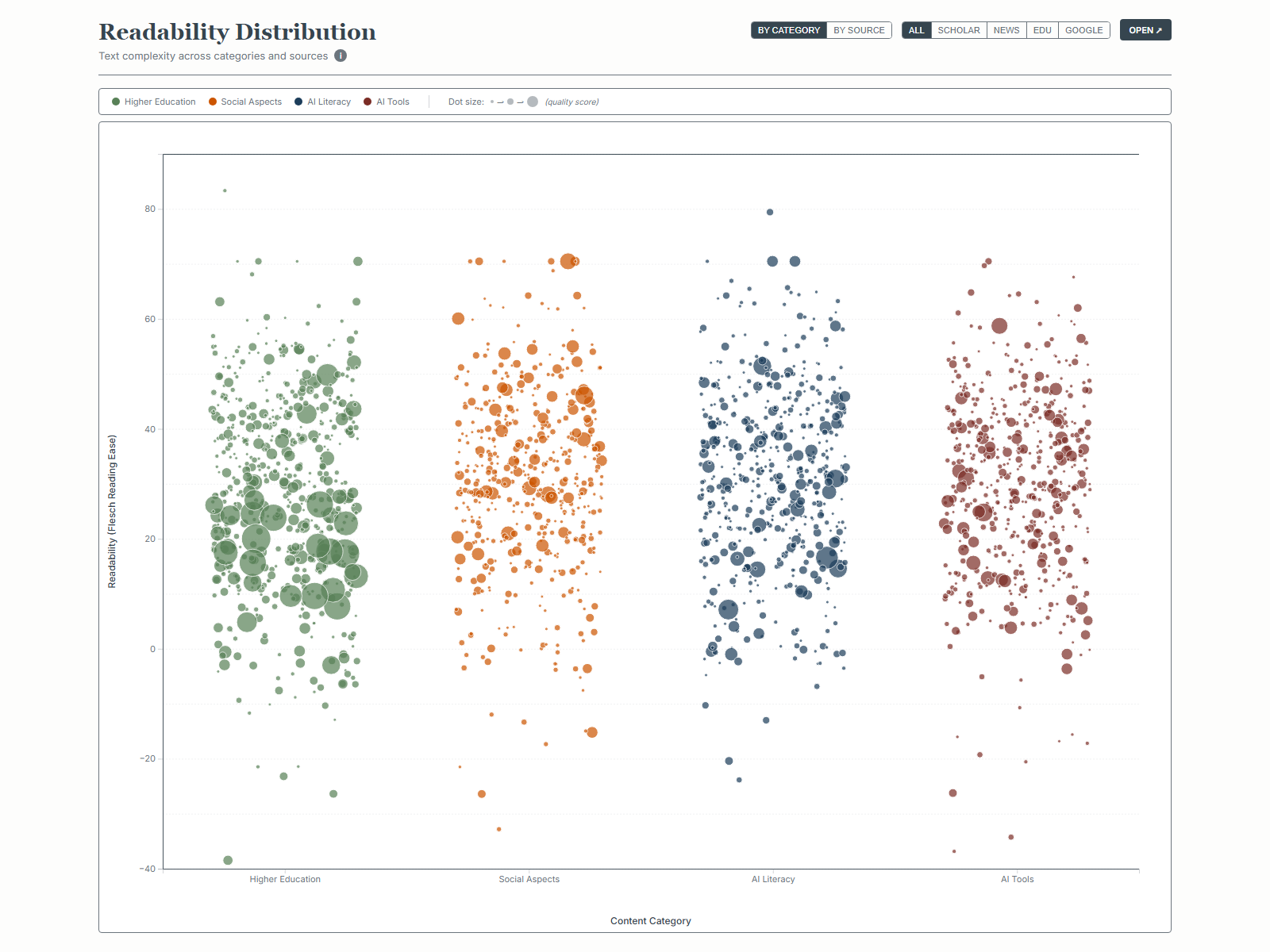
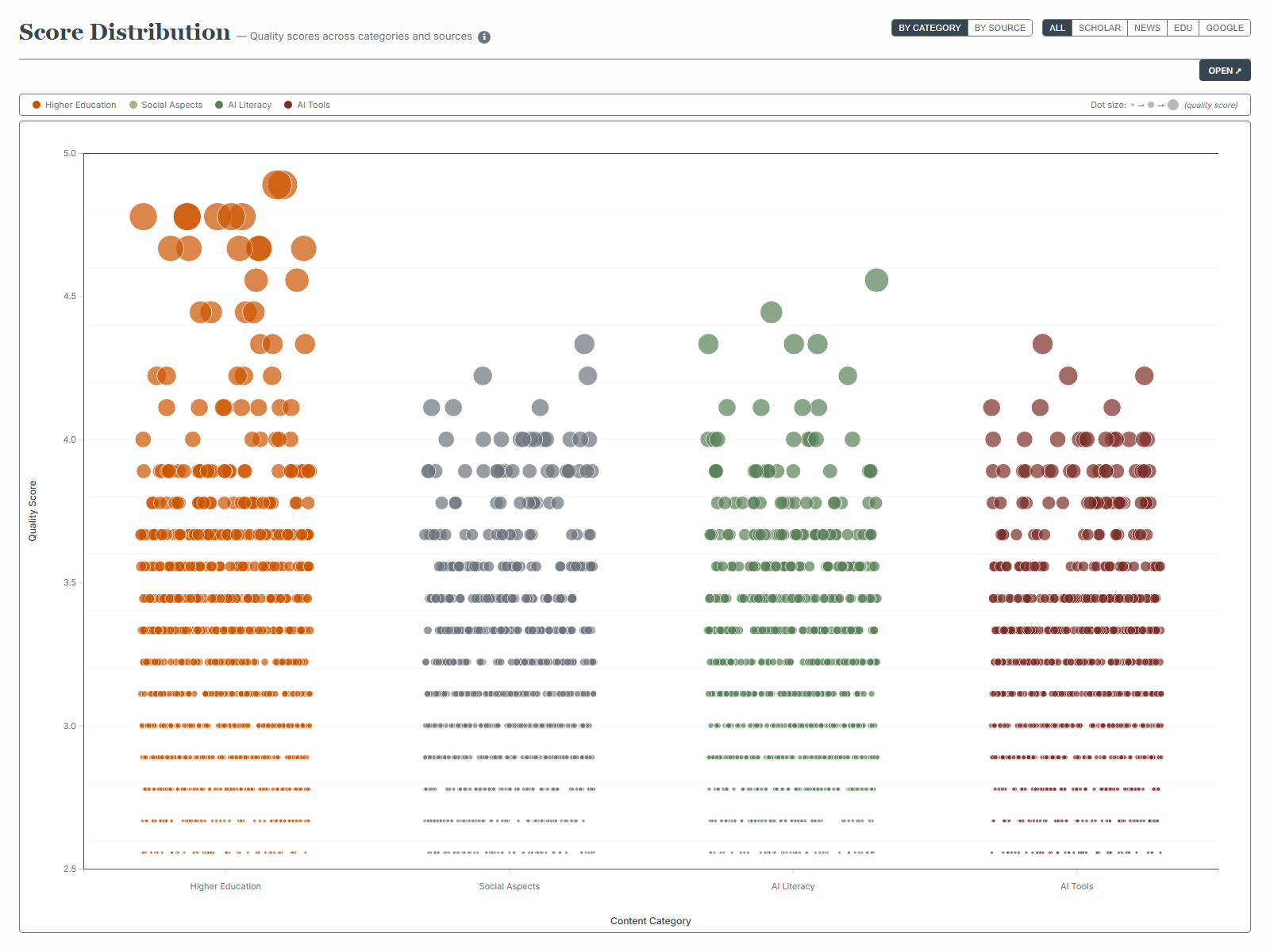
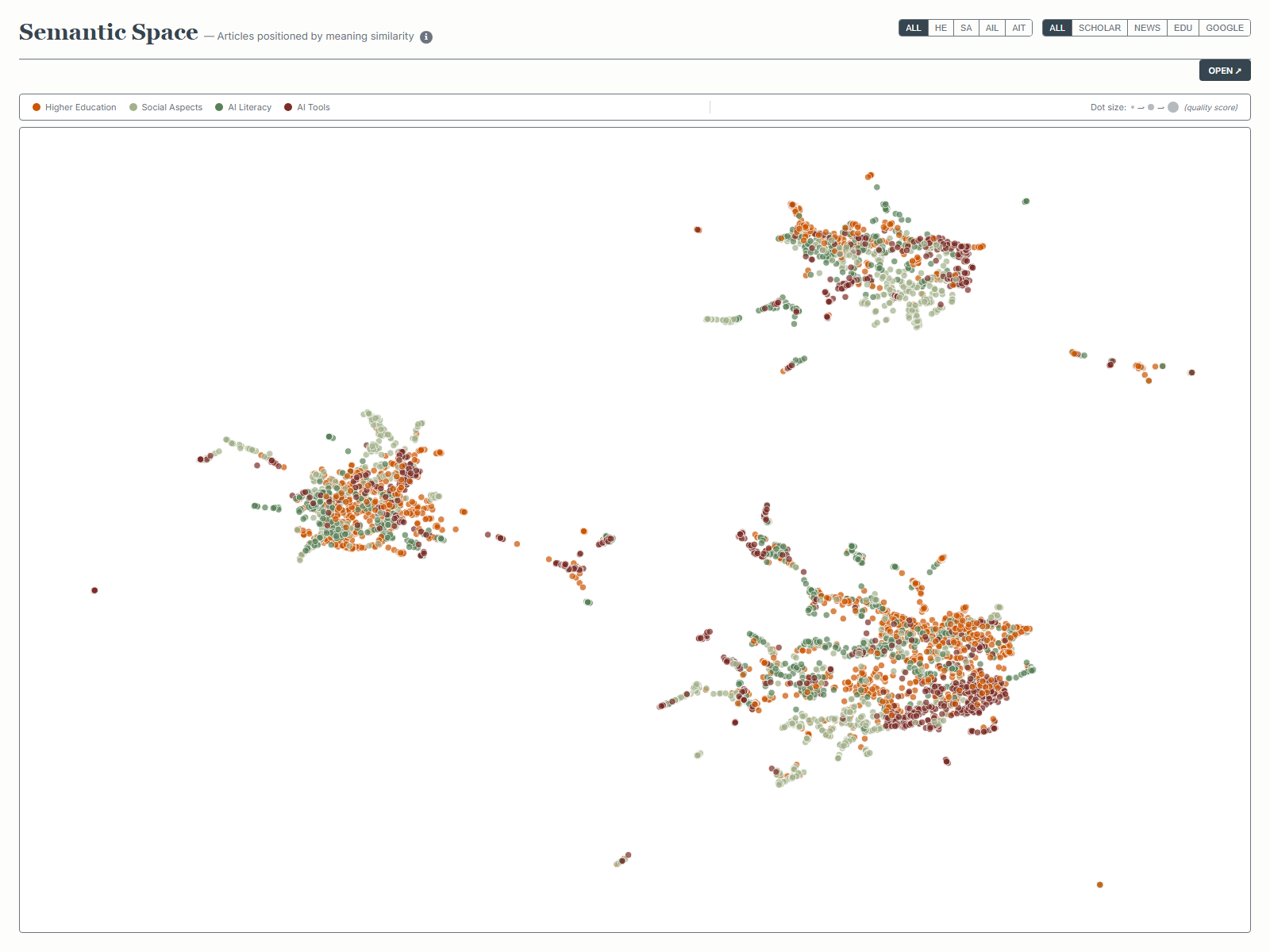
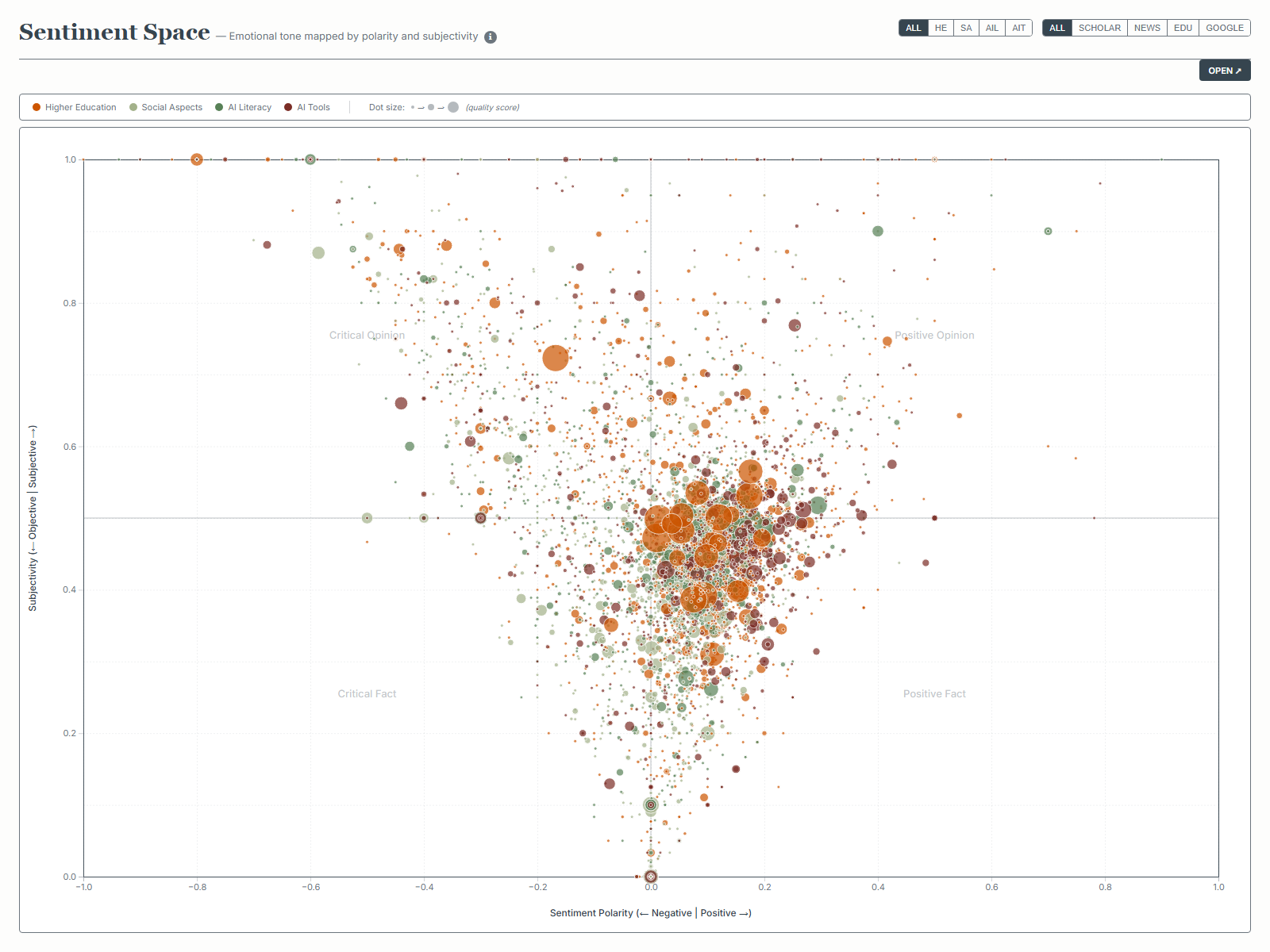
5154 evaluated | 1651 accepted

THIS WEEK'S ANALYSIS

Universities Weaponize AI Fatigue While Preaching Digital Empowerment

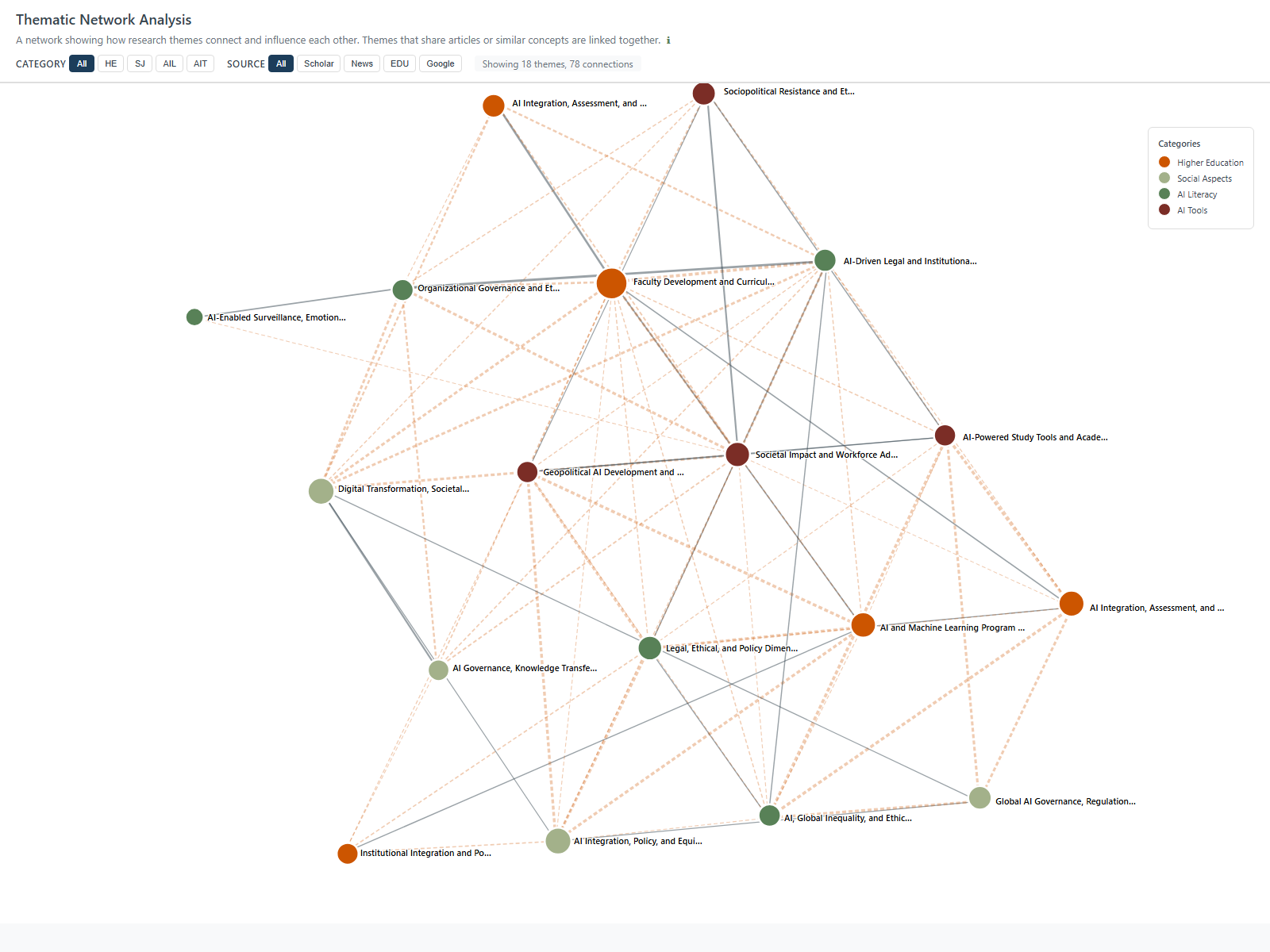
A disturbing pattern emerges as institutions deploy perpetual platform changes to exhaust faculty resistance, even as they champion AI literacy initiatives. This week's analysis reveals a fundamental contradiction: universities simultaneously position themselves as defenders against AI threats while using algorithmic surveillance to track and exploit educator burnout. The discourse remains trapped between protectionist rhetoric about safeguarding democracy and the reality of AI as an institutional control mechanism. As one exhausted professor noted, knowing her classroom 'like her living room' has become impossible when the furniture keeps disappearing—a metaphor for education's broader crisis of stability in the age of algorithmic governance.

YT

Navigate through editorial illustrations synthesizing this week's critical findings. Each image represents a systemic pattern, contradiction, or gap identified in the analysis.

THIS WEEK'S PODCASTSYT

HIGHER EDUCATION

Teaching & Learning Discussion

This week: Universities chase academic integrity through surveillance while students already use AI in one-third of their work, creating a fundamental disconnect between institutional control and learning reality. Faculty face an impossible choice: enforce detection-focused policies that preserve traditional assessment or embrace AI integration that could either enhance or bypass cognitive development. This reactive stance leaves education defending outdated structures rather than reimagining what student work means.

~25 min
Download MP3

SOCIAL ASPECTS

Equity & Access Discussion

This week: The absence of clear patterns in social AI research signals a deeper crisis: fragmented approaches prevent coherent understanding of collective impacts. Without systematic analysis connecting individual studies, researchers operate in intellectual silos, duplicating efforts while missing emergent social dynamics. This methodological void leaves policymakers navigating by intuition rather than evidence, as disconnected findings fail to illuminate how AI reshapes fundamental social structures.

~25 min
Download MP3

AI LITERACY

Knowledge & Skills Discussion

This week: Why does AI literacy education focus overwhelmingly on defending against threats rather than empowering creative use? Current frameworks position citizens as potential victims needing protection from misinformation and democratic erosion, while scholarly models propose multidimensional competencies. This threat-response paradigm creates citizens skilled at identifying deepfakes but unable to harness AI's transformative potential—a defensive stance that may ultimately leave society less prepared for an AI-integrated future.

~25 min
Download MP3

AI TOOLS

Implementation Discussion

This week: Schools simultaneously ban ChatGPT while demanding students develop AI literacy, forcing educators into impossible positions. Teachers navigate between administrative surveillance mandates and classroom innovation needs, as privacy concerns overshadow pedagogical opportunities. This dual narrative paralysis leaves students unprepared for AI-integrated futures while institutions focus on detection over integration, revealing fundamental disconnects between policy fears and educational imperatives.

~25 min
Download MP3

Weekly Intelligence Briefing

Tailored intelligence briefings for different stakeholders in AI education

Leadership Brief

FOR LEADERSHIP

Institutions must choose between defensive AI literacy programs focused on risk mitigation and transformative frameworks that prepare students for democratic participation in an AI-mediated society. The AI Literacy Heptagon demonstrates that comprehensive programs require seven integrated competencies, demanding significant resource reallocation. Early adopters report that narrow technical training fails to address emerging challenges around misinformation and democratic engagement, suggesting institutions need holistic strategies beyond compliance.

Download PDF

Faculty Brief

FOR FACULTY

While institutions rush to deploy AI literacy frameworks, emerging research reveals a fundamental disconnect: current models emphasize technical competencies over critical evaluation skills students need to navigate misinformation and ethical complexities. The AI Literacy Heptagon proposes structured pedagogical approaches, yet implementation requires faculty to redesign assessments beyond tool usage toward analytical reasoning about AI-generated content's reliability and societal impacts.

Download PDF

Research Brief

FOR RESEARCHERS

Emerging AI literacy frameworks propose multidimensional competencies beyond technical skills, yet empirical validation remains limited. The AI Literacy Heptagon offers structured assessment approaches while Renaissance Numérique's framework emphasizes democratic participation, but neither provides longitudinal impact metrics. Current methodologies excel at mapping conceptual territories but lack instruments for measuring behavioral change or societal outcomes across diverse implementation contexts.

Download PDF

Student Brief

FOR STUDENTS

Students need AI literacy frameworks that go beyond tool proficiency to include ethical evaluation and misinformation detection. While universities focus on academic integrity policies, graduates enter workplaces requiring comprehensive AI literacy including bias recognition and democratic implications. The AI Literacy Heptagon offers structured approaches, but most curricula still treat AI as optional rather than foundational career competency.

Download PDF

COMPREHENSIVE DOMAIN REPORTS

Comprehensive domain reports synthesizing research and practical insights

HIGHER EDUCATION

Teaching & Learning Report

Educational institutions exhibit reactive governance patterns that prioritize academic integrity surveillance over proactive pedagogical transformation, as evidenced by widespread student AI adoption occurring without clear institutional frameworks un étudiant sur trois transgresse les règles à l'aide de l'IA. This control-first paradigm manifests in debates that frame AI integration as preserving existing structures rather than reimagining learning processes Writing with machines? Reconceptualizing student work in the age of AI, while surveillance mechanisms expand without corresponding pedagogical innovation In the nexus of integrity and surveillance: Proctoring (re)considered. The pattern reveals institutional misalignment between technological capabilities and educational mission, suggesting current governance models structurally inhibit transformative learning approaches.

Contents: 825 articles • 7 syntheses
📄 Download Full Report (PDF)

SOCIAL ASPECTS

Equity & Access Report

Analysis of Social Aspects discourse reveals fragmented implementation patterns across educational institutions, where AI adoption proceeds through disconnected departmental initiatives rather than coherent institutional strategies. This structural fragmentation manifests in contradictory policies within single institutions—some departments ban AI tools while others mandate their use—creating confusion for students navigating inconsistent expectations. The pattern exposes deeper governance vacuums where rapid technological change outpaces institutional capacity for coordinated response, resulting in ad-hoc decision-making that privileges individual instructor preferences over systematic pedagogical frameworks. The report synthesizes cross-institutional data to map how this fragmentation undermines equity goals and amplifies existing educational disparities.

Contents: 280 articles • 7 syntheses
📄 Download Full Report (PDF)

AI LITERACY

Knowledge & Skills Report

AI literacy discourse reveals a defensive paradigm where education functions primarily as societal protection against AI-generated threats, particularly misinformation and democratic erosion, rather than enabling critical engagement with AI systems Generative AI and misinformation: a scoping review. This threat-response framing creates fundamental tension between protectionist approaches emphasizing risk mitigation and empowerment frameworks promoting active AI engagement The AI Literacy Heptagon. Analysis of policy documents and educational frameworks demonstrates how fear-based narratives dominate institutional responses, potentially limiting development of comprehensive AI competencies needed for meaningful democratic participation in AI-mediated societies.

Contents: 280 articles • 7 syntheses
📄 Download Full Report (PDF)

AI TOOLS

Implementation Report

Educational institutions exhibit persistent dual narratives regarding AI tools, simultaneously framing them as existential threats requiring prohibition and transformative opportunities demanding adoption, creating policy paralysis that prevents coherent governance frameworks from emerging. This conceptual instability manifests across academic integrity debates, privacy concerns, and pedagogical applications, where institutions oscillate between restrictive bans and uncritical implementation without establishing evidence-based middle ground. The resulting policy-practice gaps leave educators navigating contradictory mandates while students face inconsistent standards, suggesting that current governance approaches fundamentally misunderstand AI's educational role as requiring binary rather than nuanced institutional responses.

Contents: 264 articles • 7 syntheses
📄 Download Full Report (PDF)

TOP SCORING ARTICLES BY CATEGORY

Social Aspects
Top 0 articles

METHODOLOGY & TRANSPARENCY

Behind the Algorithm

This report employs a comprehensive evaluation framework combining automated analysis and critical thinking rubrics.

This Week's Criteria

Articles evaluated on fit, rigor, depth, and originality

Why Articles Failed

Primary rejection factors: insufficient depth, lack of evidence, promotional content

AI Methodology

Statistics

5,154
Articles Evaluated
1,651
Articles Accepted