Student Perspective Brief
Executive Summary
Decisions about AI in your education are being made largely without you. Across 6636 sources analyzed this week, student voices appear as a thin minority in a debate dominated by faculty, administrators, and vendors selling detection software your university may already have bought. The HEPI Student Generative AI Survey 2026 is one of the few documents that even asks what you do, and what it finds — that AI use is now near-universal among students while institutional guidance remains fragmented — is exactly what the people writing your syllabi are working around rather than with.
What’s actually at stake. The honest tradeoff is not “use AI / don’t use AI.” It’s narrower and harder. Lean on generative tools for the cognitive work an assignment is actually trying to build — reading comprehension, argument construction, problem decomposition — and the evidence suggests measurable erosion of those capacities (The Impact of AI on Students’ Reading, Critical Thinking, and Problem Solving). Refuse AI entirely and you’re competing against classmates who use it well, and against a job market that increasingly assumes fluency. Meanwhile your institution is paying real money for AI detectors that misclassify human writing, with documented consequences for students wrongly accused (Colleges pay millions for AI detectors that are flawed; Adelphi accused a student of using AI to plagiarize). Students are asking for guidance, not just policy (Students are asking for AI guidance, not just policy), and most aren’t getting it.
What this briefing provides. Evidence-based strategies for using AI where it actually helps you learn, recognizing the assignments where it will quietly hollow out the skill you’re paying tuition to acquire, and navigating inconsistent — sometimes legally precarious — institutional policies with your record intact.
Critical Tension
The Real Dilemma
Here is the tension stated plainly: 92% of UK students now use generative AI in some form, up from 66% a year earlier, and 88% have used it for assessments Student Generative Artificial Intelligence Survey 2026. At the same time, 90% of US faculty believe AI is weakening student learning 90% Of Faculty Say AI Is Weakening Student Learning: How Higher Ed Can Reverse It. You are operating inside that gap. Your professors mostly think the tool you use daily is making you worse, and you mostly think it is making you faster, clearer, less stuck.
Both can be true. A randomized controlled trial at Harvard found students learned more in less time with an AI tutor than in active-learning physics classes AI tutoring outperforms in-class active learning. A separate body of work documents that heavy reliance correlates with weaker reading, critical thinking, and problem-solving over time The Impact of AI on Students’ Reading, Critical Thinking, and Problem Solving. The honest read: AI used as scaffolding for thinking you do yourself appears to help; AI used as a substitute for that thinking appears to erode the very capacities your degree is supposed to build. No one has handed you a reliable way to tell which kind of use you are doing in the moment.
Why Institutional Guidance Isn’t Helping
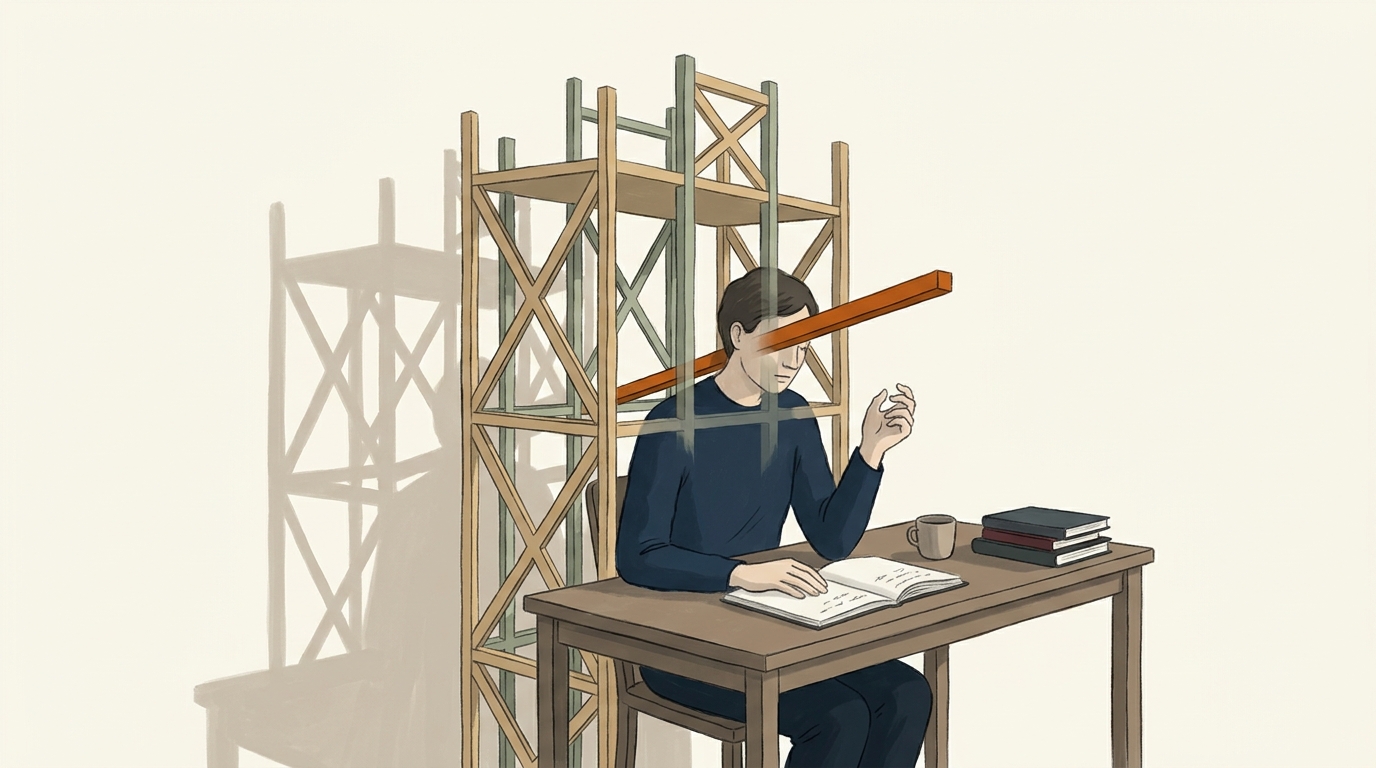
Policies are incoherent across the courses you take in a single semester. One professor bans AI outright, another requires it, a third says “use it ethically” without defining the term. Students themselves are explicitly asking for guidance rather than another paragraph of policy Students are asking for AI guidance, not just policy. The assessment debate inside higher ed has been “misframed” — academic staff are being told to redesign assessments at speed without the time, training, or institutional cover to do it well Academic Staff Are Paying The Price For The Misframed GenAI Assessment Debate. You inherit the consequences of that disorganization.
The detection layer makes it worse. Colleges are paying millions for AI detectors that are demonstrably flawed, with false-positive rates that have already produced lawsuits — Adelphi University is being sued by a student who says he was wrongly accused Colleges pay millions for AI detectors that are flawed Adelphi accused a student of using AI to plagiarize. Decisions about how your work is read, judged, and flagged are being made by vendors and committees with almost no student representation in the loop.
The Skills Question
What atrophies when you outsource? Drafting, revision, holding a confused idea long enough to clarify it, tolerating the discomfort of not yet knowing. These are not romantic notions — they are the cognitive moves that durable learning is built from, and meta-analytic work is starting to map where GenAI helps and where it short-circuits the process Exploring the effect of GenAI on learning outcomes in higher education. A reframing worth taking seriously: AI shifts learning from cognitive necessity to cognitive choice From Cognitive Necessity to Cognitive Choice. The work of thinking is now opt-in. That is a real change in what your education demands of you.
What is not being taught: how to evaluate model output for hallucination, how to prompt without laundering your own confusion, how to recognize when a tool is flattening your voice into generic prose, how to use AI without becoming dependent on it. Critical AI literacy — the actual evaluative skill set — is still mostly absent from required curricula 24 Critical AI Literacy Questions Every Teacher Should Ask Students. Students are also navigating AI in deeply personal registers — companionship, mental health, identity work — that the academic conversation barely touches The Myriad Complex Ways Young People Use AI.
Your Position
You have more agency than the discourse suggests, and the real risks split two ways. Lean too heavily on AI and you graduate with a transcript and weaker capacities than the transcript implies — a private loss that compounds. Refuse it entirely in fields that are reorganizing around it and you graduate underprepared in a different direction. The defensible middle is narrower than it sounds: use AI where it expands what you can attempt, refuse it where the struggle is the learning, and keep a written record of how you used it on each assignment. That record protects you against flawed detectors, and more importantly, it forces you to notice your own pattern of use while institutions take another two or three years to catch up.
Actionable Recommendations
Student Briefing: Building an AI Practice You Can Defend
You are doing this without much help. Faculty disagree about what counts as cheating, syllabi contradict each other across the same major, and the detection tools your instructors rely on are documented to misfire on the kind of writing you and your classmates actually produce Colleges pay millions for AI detectors that are flawed - CalMatters. The HEPI 2026 survey found AI use among students is now near-universal, and what students consistently say they want is not more rules but a coherent way to think about their own practice Student Generative Artificial Intelligence Survey 2026 - HEPI, Students are asking for AI guidance, not just policy. Here are four strategies to build that.
Audit your own use before someone else does it for you
The default pattern — open a chat window, paste the prompt, edit lightly, submit — is the one most likely to leave you both academically exposed and cognitively flatter at the end of the term. The Inside Higher Ed reporting on student AI behavior describes a far messier reality: students using these tools for emotional support, scheduling, drafting, summarizing, talking through breakups, and writing lab reports, often without distinguishing between the categories The Myriad Complex Ways Young People Use AI - Inside Higher Ed. The risk isn’t moral; it’s that the practice becomes invisible to you.
A more effective approach: keep a one-week log of every AI interaction — what you asked, what you used, what you would have done otherwise.
- This week: note each session in a single doc. Two columns: “what I would have done without it” and “what I did instead.”
- This month: categorize. Which uses replaced thinking you wanted to do, and which replaced friction you didn’t?
- This semester: drop the first kind. Keep the second.
What this builds: a defensible account of your own practice — useful when a professor asks, useful when an employer asks, useful when you ask yourself why an assignment felt empty. What to watch for: if you can’t reconstruct what you actually did on an assignment two weeks later, the tool was thinking for you.
Protect the skills that compound
The Nature RCT showing AI tutoring outperforming in-class active learning on short-term outcomes is real, and it will be cited at you AI tutoring outperforms in-class active learning: an RCT … - Nature. What that study measures is acquisition of defined content under tutoring conditions. What it does not measure is the slower work — sustained reading, argument construction across a 6,000-word paper, sitting with a problem you can’t immediately solve — that the meta-analytic evidence suggests is exactly where unsupervised AI use produces the weakest gains Exploring the effect of GenAI on learning outcomes in higher education: A three-level meta-analysis. The Forbes summary of the 90%-of-faculty figure is overheated, but the underlying finding — that students themselves report feeling less capable after heavy use — is in the HEPI data too 90% Of Faculty Say AI Is Weakening Student Learning: How … - Forbes.
A more effective approach: pick two or three skills you’ve decided are non-negotiable for the kind of work you want to do, and do those without AI. Everything else is negotiable.
- This week: name the skills. Reading primary sources. Writing a first draft. Doing the math by hand once before checking. Whatever they are.
- This month: build the rule into your schedule — these tasks happen in a different physical place or at a different time than your AI work.
- This semester: notice whether the gap between “AI-assisted you” and “unassisted you” is widening or narrowing. The framing here — moving from cognitive necessity to cognitive choice — is the right one From Cognitive Necessity to Cognitive Choice: Higher Education Assessment and Learning in the Age of Generative AI.
What this builds: a baseline you actually own. What to watch for: realizing you can’t remember the last time you wrote a paragraph from scratch.
Navigate inconsistent policies by documenting, not guessing
Policies will not be consistent across your courses this semester, and the misframed assessment debate happening above your head is unlikely to resolve before you graduate Academic Staff Are Paying The Price For The Misframed …. The Adelphi case — a student sued after being accused of AI use he says he didn’t do — is the warning shot Adelphi accused a student of using AI to plagiarize. He … - Newsday. Detector false-positive rates are high enough that “I didn’t use it” is not a defense; you need evidence.
A more effective approach: create an audit trail for any assignment where AI use is restricted or ambiguous.
- This week: for every restricted assignment, work in a document with version history on (Google Docs, Word with track-changes, or a Git-style tool). Don’t paste large blocks from anywhere.
- This month: when a syllabus is unclear, email the instructor with a specific question — “Can I use Grammarly for grammar checks? Can I use ChatGPT to generate practice questions from the readings?” — and keep the reply.
- This semester: if a course allows AI use, write a one-paragraph methods note at the end of each major assignment describing what you used and how. This is what authentic-assessment frameworks are pushing toward anyway Beyond Detection: Redesigning Authentic Assessment in an AI … - MDPI.
What this builds: a practice that survives a false accusation. What to watch for: an instructor whose policy you genuinely cannot pin down — escalate to the department chair before the accusation, not after.
Stress-test the output instead of trusting the fluency
LLM output is fluent in a way that bypasses the part of your brain that catches errors. The educator-tech literature has compiled the questions worth asking of any AI response — what’s its source, what’s missing, who would disagree, what would change the answer 24 Critical AI Literacy Questions Every Teacher Should Ask Students. The recent UChicago piece on time-constrained AI access argues that imposing your own latency on the interaction — not accepting the first answer — is the cognitive move that distinguishes use from dependence The Time Constraints of AI Access Could Change How We Think.
A more effective approach: before using any AI output, force a verification step.
- This week: for any factual claim, find one independent source. For any citation it generates, open the actual paper. Hallucinated references are still common and are the single most reliable way to fail an assignment.
- This month: when you ask for an explanation, ask the same question two more ways and compare. Where the answers diverge is where the model is least reliable.
- This semester: treat AI like a confident undergrad TA — useful as a sounding board, never a final authority.
What this builds: the editorial judgment employers and graduate programs are now openly screening for. What to watch for: catching yourself accepting an answer because it sounds right rather than because you checked it. That’s the moment the practice has stopped serving you.
Supporting Evidence
The Evidence Landscape: What We Actually Know
What We Analyzed
This briefing synthesizes 6,636 sources from the week of April 20–26, 2026, across higher education, social aspects, AI literacy, and AI tools coverage — roughly 2,490 of those sit specifically inside the higher-ed category. That is a lot of discourse, but discourse is not knowledge. Most of what gets written about students and AI is written about you, not with you, and certainly not by you. What follows is an honest read of what the evidence supports, what it doesn’t, and where the loudest voices have crowded out questions that actually concern your life.
Who’s Speaking, Who’s Not
The dominant voices in this week’s record are faculty (worried about cheating), administrators (worried about liability and detection contracts), and vendors (selling the solution to both). The closest thing to a direct student-voice document is the Student Generative Artificial Intelligence Survey 2026 from HEPI — useful, but a survey is not the same as students setting the research agenda. Inside Higher Ed did report on the myriad complex ways young people use AI, which at least acknowledges that “student AI use” is not a single behavior. Parents barely register. The result: when Times Higher Education notes that students are asking for AI guidance, not just policy, it lands as news — because the research apparatus rarely asked.
What does this shape? It centers the institution’s interest (defensible assessment, plagiarism enforcement, throughput) over yours (skill development, fair evaluation, employability, mental load).
What’s Actually Being Debated
The core contradiction this week is unresolved and openly so. A Nature RCT found AI tutoring outperformed in-class active learning, and a Exploring the effect of GenAI on learning outcomes in higher education: A three-level meta-analysis reports positive effects on learning outcomes from generative AI. At the same time, Forbes reports 90% of faculty say AI is weakening student learning, and a study on AI’s impact on reading and critical thinking raises real concerns about offloading cognition. Both can be true: AI can lift performance on measured tasks while atrophying the underlying capacities measured tasks were supposed to proxy. Adults are figuring this out in real time. You are navigating without a map because no one has finished drawing one.
Where Implementations Are Failing
The clearest failure pattern is detection. CalMatters documented colleges paying millions for AI detectors that are flawed, and Adelphi accused a student of using AI to plagiarize. He … - Newsday. Surveillance-grade tools marketed at K-12, like Gaggle, Programas de IA para monitorear a estudiantes tienen riesgos de …. Institutions are buying enforcement before they have a pedagogy — which tells you what’s being prioritized (defensibility) and what’s being neglected (designing assessments that are worth doing in the first place, as argued in Beyond Detection: Redesigning Authentic Assessment in an AI Era).
What This Means for You
Two things worth holding onto. First: your school’s AI policy is, in many cases, a procurement decision dressed as a pedagogical one. The burden of a false positive from a detector falls on you — your transcript, your appeal, your time — not on the vendor. Read the policy. Ask what tool flagged you and what its documented error rate is.
Second: the evidence on skill development is genuinely mixed, and anyone who tells you otherwise is selling something. Authentic Assessment in the Age of AI and the MDPI piece From Cognitive Necessity to Cognitive Choice both argue the real question is which cognitive work you choose to keep doing yourself. That choice is yours to make deliberately, not by default. The 24 critical AI literacy questions every teacher should ask students are worth reading — and worth asking your instructors back.
References
- 24 Critical AI Literacy Questions Every Teacher Should Ask Students
- 90% Of Faculty Say AI Is Weakening Student Learning: How Higher Ed Can Reverse It
- Academic Staff Are Paying The Price For The Misframed GenAI Assessment Debate
- Adelphi accused a student of using AI to plagiarize
- AI tutoring outperforms in-class active learning
- Authentic Assessment in the Age of AI
- Beyond Detection: Redesigning Authentic Assessment in an AI … - MDPI
- Programas de IA para monitorear a estudiantes tienen riesgos de …
- Colleges pay millions for AI detectors that are flawed
- Exploring the effect of GenAI on learning outcomes in higher education
- From Cognitive Necessity to Cognitive Choice
- HEPI Student Generative AI Survey 2026
- Students are asking for AI guidance, not just policy
- The Impact of AI on Students’ Reading, Critical Thinking, and Problem Solving
- The Myriad Complex Ways Young People Use AI
- The Time Constraints of AI Access Could Change How We Think