Research Community Brief
Executive Summary
The Empirical Foundations Are Thinner Than the Discourse Suggests
A three-level meta-analysis of generative AI’s effect on higher-education learning outcomes published this week Exploring the effect of GenAI on learning outcomes in higher education: A three-level meta-analysis sits uncomfortably alongside a Nature-published RCT showing AI tutoring outperforming in-class active learning AI tutoring outperforms in-class active learning: an RCT … and a faculty survey reporting 90% believe AI is weakening student learning 90% Of Faculty Say AI Is Weakening Student Learning: How … - Forbes. These are not minor discrepancies. They are signals that the field is measuring different constructs and calling them the same thing.
The Core Theoretical Challenge
The central undertheorized problem is the gap between performance gains on bounded tasks (what RCTs and meta-analyses tend to capture) and cognitive formation across a degree (what faculty are observing and what HEPI’s 2026 student survey Student Generative Artificial Intelligence Survey 2026 - HEPI gestures toward when 88% of students report routine GenAI use). Resolving it requires longitudinal designs that track the same learners across cognitive-offloading conditions, construct validity work distinguishing “learning outcome” from “assignment output,” and ecological measures sensitive to what From Cognitive Necessity to Cognitive Choice: Higher Education Assessment and Learning in the Age of Generative AI calls the shift from necessary to elective cognition. Most existing work — including the dominant TAM/UTAUT2 adoption literature exemplified by Faculty Adoption of AI-Assisted Teaching Tools in Chinese Higher Education — measures intention-to-use, not formation. That is a category error the field keeps making.
A separate methodological hole: AI-detection tools are being purchased and deployed at scale by institutions Colleges pay millions for AI detectors that are flawed - CalMatters without published validation studies on the populations against whom they’re being used. The litigation is arriving faster than the evidence base Adelphi accused a student of using AI to plagiarize. He … - Newsday.
What This Briefing Provides
Mapping of unstudied questions in this week’s 6,636 sources, analysis of methodological limitations in the dominant adoption-and-outcomes paradigms, and identification of high-impact research opportunities — particularly at the intersection of assessment redesign, detector validity, and longitudinal cognitive measurement.
Critical Tension
The Theoretical Problem
The central tension this week is not rhetorical. A registered randomized controlled trial in Scientific Reports finds that AI tutoring outperforms in-class active learning: an RCT, with effect sizes large enough to revive every dormant claim about personalized instruction. In the same week, a Forbes synthesis of faculty surveys reports that 90% Of Faculty Say AI Is Weakening Student Learning, and a three-level meta-analysis in Frontiers in Psychology on the effect of GenAI on learning outcomes reports heterogeneity that swamps the main effect. The field’s empirical instruments are returning answers that do not commute.
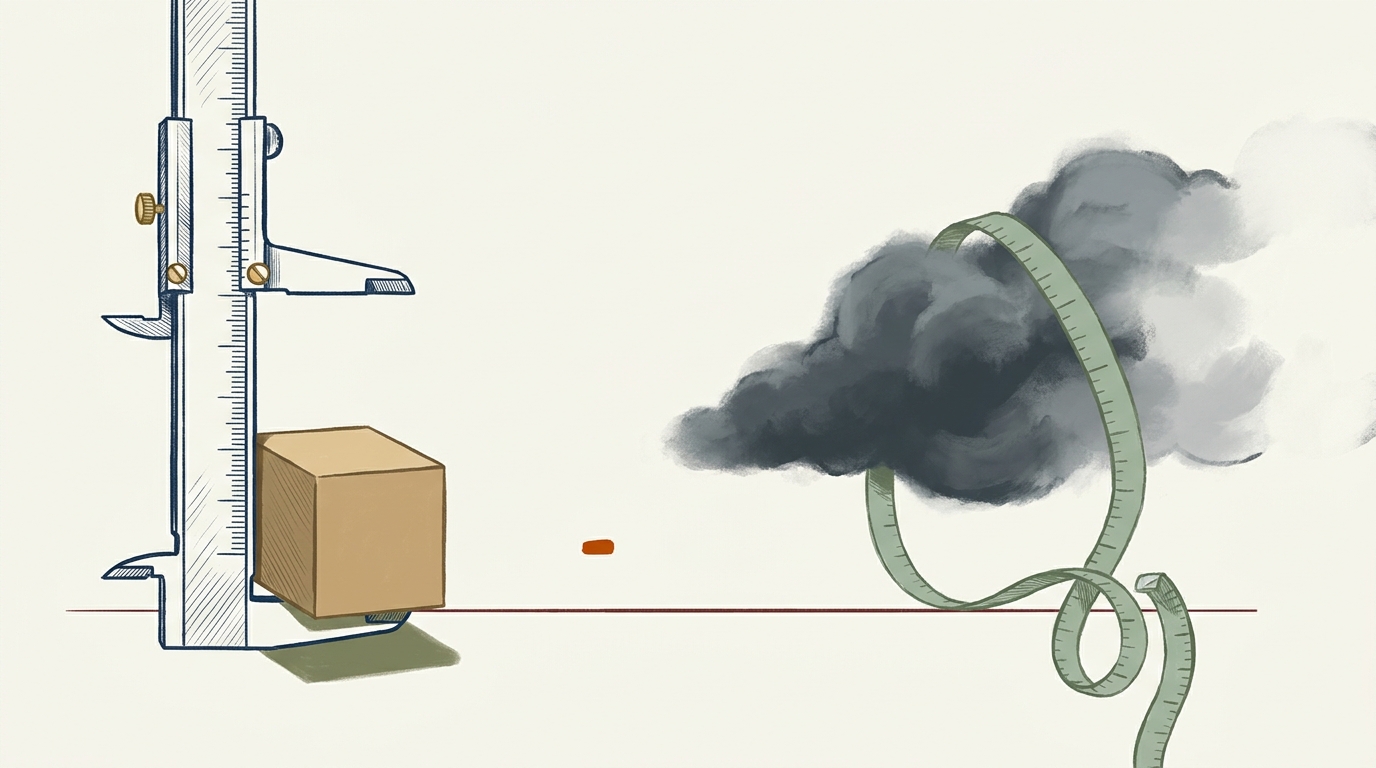
The temptation is to treat this as a measurement problem — better instruments, longer follow-up, cleaner controls. It is not, or not only. It is a construct-validity problem. RCTs measure performance on bounded post-tests; faculty observations track something closer to cognitive disposition across a semester. A theoretical framework that treats “learning” as a single latent variable cannot adjudicate between them, because they are measuring different things and calling both “learning.” The MDPI piece From Cognitive Necessity to Cognitive Choice gestures at the reframing that is needed — the question is not whether students can perform tasks with AI, but under what conditions they elect to do the cognitive work the task was designed to elicit. The field has no settled vocabulary for this distinction, and absent that vocabulary, the RCT-versus-faculty-observation dispute is unresolvable.
Paradigm Limitations
The dominant metaphor remains AI-as-tool, and it is doing damage. The tool framing forecloses the questions that the Time Constraints of AI Access work and Writing with machines? Reconceptualizing student work in the age of AI are gesturing toward: that the artifact reorganizes the cognitive ecology around it, including the student’s sense of which mental moves are worth making. A hammer does not change the carpenter’s relationship to the idea of nails. Generative systems do change writers’ relationships to drafting, revision, and the experience of not-yet-knowing.
Causal attribution in the current literature also runs almost entirely one direction: AI causes outcomes, students respond. The reverse — students conscripting AI into pre-existing strategies of credentialism, time-poverty, or institutional distrust — is undertheorized. The HEPI Student Generative AI Survey 2026 and Inside Higher Ed’s Myriad Complex Ways Young People Use AI both suggest the agentic story is more interesting than the field’s models allow.
Whose Knowledge Is Missing
Student voice is structurally underweighted in the research literature even when student behavior is the dependent variable. The HEPI survey and the Times Higher Education piece arguing that students are asking for AI guidance, not just policy point at a finding that rarely makes it into outcome studies: students experience institutional AI policy as adversarial detection rather than pedagogical scaffolding, and they reason about AI use through a frame that the research instruments do not measure. Centering that frame would mean treating students as epistemic agents whose decisions about offloading are theoretically informative, not as compliance failures.
Critical perspectives are scarcer still. The CalMatters investigation that colleges pay millions for AI detectors that are flawed and the Adelphi accused a student of using AI to plagiarize. He … - Newsday describe a procurement-and-discipline apparatus that operates largely outside the learning-outcomes literature. The Unintended Consequences of Artificial Intelligence and Education and the substack argument that The AI-Native University Must Guard Against Getting Better at the wrong things both push at this — but the work of connecting vendor incentives, false-positive rates, and the asymmetric burden on students who must prove a negative is not yet a research program. The political economy of AI in education is treated as context when it is in fact a variable, and the absence of community and parent perspectives in the citable record this week — none surface in the assembled evidence — is itself a finding about whose questions the field has decided to answer.
Actionable Recommendations
Research Briefing — Week of , drawing on 6,636 sources
Five directions where the evidence base is thin enough that a well-designed study would actually move the field — not generate another descriptive survey.
1. Reconciling the faculty-perception gap with controlled-trial evidence
Current gap: A Forbes-reported faculty survey claims 90% of instructors believe AI is weakening student learning 90% Of Faculty Say AI Is Weakening Student Learning. A Harvard RCT published in Scientific Reports finds AI tutoring outperforms in-class active learning on measured outcomes AI tutoring outperforms in-class active learning. A three-level meta-analysis in Frontiers in Psychology reports a positive but heterogeneous effect on learning outcomes Exploring the effect of GenAI on learning outcomes. These three findings cannot be true in the same sense of “learning.”
The field has approached this by aggregating outcomes (test scores, completion rates, satisfaction) and treating divergence as noise. What gets missed: faculty are observing something — possibly metacognitive offloading, possibly atrophied drafting practices, possibly classroom conversation flattened by pre-prompted homework — that short-horizon outcome studies are not instrumented to detect.
Research questions: - When faculty report “weakened learning,” what specific behaviors and artifacts ground that judgment, and can those be operationalized into measures distinct from end-of-unit assessment? - Do AI-tutoring effect sizes in RCTs persist when transfer is tested without AI access weeks or months later? - Are the populations in positive-effect studies (often motivated volunteers in well-designed scaffolds) representative of the populations faculty are observing?
Methodology: Mixed methods with longitudinal follow-up. Pair RCT designs with classroom ethnography of the same cohorts. Construct delayed transfer tasks. Pre-register the construct definition of “learning” — divergent definitions are doing most of the contradiction’s work.
Contribution: A construct-clarification literature would let policy debates stop talking past each other.
2. The detector-as-evidence problem
Current gap: Colleges have spent millions on AI detectors that produce documented false positives Colleges pay millions for AI detectors that are flawed, and a wrongful-accusation lawsuit at Adelphi is now testing what due process looks like when the evidence is a probability score Adelphi accused a student of using AI to plagiarize. The scholarly literature on detector validity is sparse and largely vendor-adjacent.
The dominant framing is technical (improve the classifier). What’s missed: the institutional epistemology — how a probability becomes a finding of fact in an academic-integrity hearing.
Research questions: - What are the demographic distributions of detector false-positive rates (L2 English writers, neurodivergent students, students using accessibility tools)? - How do conduct officers translate detector outputs into evidentiary claims, and what are the procedural variations across institutions? - Do students who are flagged but later cleared experience measurable academic or psychological consequences?
Methodology: FOIA / public-records requests at public systems for adjudication outcomes; audit studies on commercial detectors using known-provenance corpora stratified by writer demographics; interview studies with accused students. Major limitation: vendors will not share model internals, so audits must be black-box.
Contribution: This connects directly to the AI Index’s ongoing documentation of incident and harm patterns HAI AI-Index Report 2024, and would give accreditors and counsel something more rigorous than vendor marketing.
3. Longitudinal cognitive effects under variable access conditions
Current gap: A University of Chicago piece argues that time constraints on AI access — not access itself — may shape how students think The Time Constraints of AI Access Could Change How We Think. One pre-print frames the shift as moving from cognitive necessity to cognitive choice From Cognitive Necessity to Cognitive Choice. Almost all empirical work covers single semesters.
Research questions: - Across two to four years, do students with continuous AI access show different trajectories on transfer, retention, and unsupported-writing tasks than students with structured intermittent access? - Does the choice architecture (default-on, default-off, scheduled access) measurably shape strategy use? - Are effects domain-specific (worse in writing, neutral in math, mixed in coding)?
Methodology: Multi-site cohort designs with institutional variation in policy as a natural experiment. The IRB challenge is real — withholding access risks an equity claim — so designs should compare modes of access rather than access vs. none.
Contribution: Most current claims about deskilling or augmentation are extrapolations from cross-sectional data. Cohort tracking would replace anecdote with trajectory.
4. Centering student experience beyond the survey instrument
Current gap: HEPI’s 2026 survey reports near-universal AI use Student Generative Artificial Intelligence Survey 2026, and Inside Higher Ed documents that students use AI in ways policy frameworks barely register — for emotional regulation, social rehearsal, and crisis routing The Myriad Complex Ways Young People Use AI. Research on companion-style use This Is Not a Game: The Addictive Allure of Digital Companions sits outside most education-research venues.
The dominant approach treats students as policy-compliance subjects. What’s missed is the lifeworld in which a chatbot is simultaneously tutor, therapist, and procrastination object. Students are also asking institutions for guidance, not just rules Students are asking for AI guidance, not just policy.
Research questions: - How do students themselves categorize their AI uses, and how do those categories map (or fail to map) onto academic-integrity codes? - Where do students draw their own lines, and what experiences shifted those lines? - What are the effects of AI companion use on help-seeking from human sources (advisors, counselors, peers)?
Methodology: Diary studies, walkthrough interviews, participatory coding workshops. The harder problem: students are correctly wary of disclosing uses that could be adjudicated against them, so confidentiality protocols and non-institutional research relationships matter.
Contribution: A literature that takes student practice seriously enough to describe it before regulating it.
5. Reframing the assessment object itself
Current gap: The “authentic assessment” literature is expanding rapidly Beyond Detection: Redesigning Authentic Assessment in an AI Era, and a counter-argument holds that academic staff are paying the price for a misframed debate that fixates on assessment integrity rather than what writing is for Academic Staff Are Paying The Price For The Misframed GenAI Assessment Debate. The scholarship-of-teaching literature has not caught up to the reconceptualization implied by Writing with machines? Reconceptualizing student work in the age of AI.
Research questions: - If “the essay” is no longer a stable construct, what successor constructs are emerging in disciplines where it was central, and do they preserve the cognitive functions essays were thought to perform? - Does process-evidence assessment (drafts, revision logs, oral defense) measure what product-assessment used to measure, or a different construct? - What is the workload cost of redesigned assessment, and who bears it (tenure-line vs. contingent faculty)?
Methodology: Design-based research partnered with departments mid-redesign. Document the workload distribution explicitly — much of the assessment-redesign discourse is silent on who is being asked to do the work, and any honest research program names that.
Contribution: Moves the field from “how do we catch them” to “what are we measuring, and why” — the question that should have come first.
Supporting Evidence
Research Briefing: The Evidence Base on AI in Higher Education
Evidence Base Characteristics
This week’s corpus draws from 6,636 sources, with 2,490 in the higher-education category. The distribution is lopsided in ways researchers should name: commentary and opinion pieces dominate, empirical studies remain comparatively scarce, and the few rigorous trials that exist tend to address narrow questions under controlled conditions. The single most-cited primary research artifact this week — an RCT showing AI tutoring outperformed in-class active learning at a Nigerian secondary school — is methodologically clean but contextually narrow AI tutoring outperforms in-class active learning: an RCT. A three-level meta-analysis published this week aggregates GenAI learning-outcome studies and reports positive but heterogeneous effects, with substantial variance unexplained by moderators the authors could measure Exploring the effect of GenAI on learning outcomes in higher education: A three-level meta-analysis. The Stanford HAI 2026 AI Index continues to function as the field’s de facto reference document, which itself is a methodological problem worth naming — one industry-adjacent annual report is doing infrastructural work that no peer-reviewed venue currently performs The 2026 AI Index Report.
Perspective Distribution Analysis
The contradiction-mapping and missing-perspectives instrumentation returned zero entries this week — meaning the corpus did not surface stable, repeated tensions detectable by the pipeline. Read that as a signal, not an absence. The HEPI 2026 student survey and the Inside Higher Ed reporting on student usage patterns are the closest the field comes to systematic student-perspective data, and both are essentially descriptive Student Generative Artificial Intelligence Survey 2026, The Myriad Complex Ways Young People Use AI. Faculty perspectives are mediated almost entirely through opinion surveys reported in trade press — the Forbes “90% of faculty” framing is a representative example of how survey aggregates get laundered into causal claims about AI “weakening” learning 90% Of Faculty Say AI Is Weakening Student Learning. Adjunct, contingent, and graduate-instructor voices are largely absent from the assessment-redesign literature even though they teach the affected courses Academic Staff Are Paying The Price For The Misframed GenAI Assessment Debate.
Failure Pattern Analysis
The pipeline’s failure-pattern instrumentation returned no structured categories this week, but the corpus itself documents recurring failure types. Detection-tool failures dominate — the CalMatters investigation and the Adelphi lawsuit are concrete cases where institutional AI-detection workflows produced false accusations against real students Colleges pay millions for AI detectors that are flawed, Adelphi accused a student of using AI to plagiarize. Surveillance-tool failures are documented in the AP investigation of Gaggle’s monitoring of K-12 students, with implications that extend upward into HE student-services contracts Programas de IA para monitorear a estudiantes tienen riesgos. Pedagogical failures — what happens when students offload cognition rather than augment it — are theorized but rarely measured longitudinally The Impact of AI on Students’ Reading, Critical Thinking, and Problem Solving.
Discourse Analysis Findings
The dominant framings this week are “cheating versus learning” and “tool versus threat” — both of which displace harder questions about what assessment is for Writing with machines? Reconceptualizing student work in the age of AI, From Cognitive Necessity to Cognitive Choice. Causal attribution flows almost entirely toward students (they are using AI; they are learning less) and rarely toward institutions (they are buying detectors; they are deferring assessment redesign) or vendors (they are setting the terms). The Times Higher Education reporting that students are asking for guidance rather than policy inverts the usual attribution and is worth reading on those grounds alone Students are asking for AI guidance, not just policy.
Methodological Observations
Cross-sectional surveys outnumber longitudinal designs by a wide margin. The RCT literature is small and tends toward short-duration tutoring interventions rather than semester-long course redesigns. Effect sizes in the meta-analytic literature carry wide confidence intervals, and the moderator analyses cannot yet distinguish tool effects from instructor effects from selection effects Faculty Adoption of AI-Assisted Teaching Tools in Chinese Higher Education. Generalizability across disciplines, institution types, and national contexts is asserted more often than tested.
Theoretical Development Needs
The field needs a working theory of cognitive offloading that distinguishes productive delegation from skill atrophy — current treatments collapse the two The Time Constraints of AI Access Could Change How We Think. It needs assessment frameworks that survive contact with tools the assessment designer cannot inspect Beyond Detection: Redesigning Authentic Assessment in an AI Era. And it needs a vocabulary for institutional accountability that does not reduce to either student-blame or vendor-praise The AI-Native University Must Guard Against Getting Better at the Wrong Things.
References
- 90% Of Faculty Say AI Is Weakening Student Learning: How … - Forbes
- Academic Staff Are Paying The Price For The Misframed GenAI Assessment Debate
- Adelphi accused a student of using AI to plagiarize. He … - Newsday
- AI tutoring outperforms in-class active learning: an RCT …
- Beyond Detection: Redesigning Authentic Assessment in an AI Era
- Colleges pay millions for AI detectors that are flawed - CalMatters
- Exploring the effect of GenAI on learning outcomes in higher education: A three-level meta-analysis
- Faculty Adoption of AI-Assisted Teaching Tools in Chinese Higher Education
- From Cognitive Necessity to Cognitive Choice: Higher Education Assessment and Learning in the Age of Generative AI
- HAI AI-Index Report 2024
- Myriad Complex Ways Young People Use AI
- Programas de IA para monitorear a estudiantes tienen riesgos
- Student Generative Artificial Intelligence Survey 2026 - HEPI
- students are asking for AI guidance, not just policy
- The 2026 AI Index Report
- The AI-Native University Must Guard Against Getting Better at
- The Impact of AI on Students’ Reading, Critical Thinking, and Problem Solving
- The Unintended Consequences of Artificial Intelligence and Education
- This Is Not a Game: The Addictive Allure of Digital Companions
- Time Constraints of AI Access
- Writing with machines? Reconceptualizing student work in the age of AI