Faculty & Instructors Brief
Executive Summary
Faculty & Instructors: The Week the Detection Story Collapsed
Our scan of 6,636 sources this week surfaces a contradiction faculty cannot keep deferring: a Nature-published RCT reports AI tutoring outperformed in-class active learning on measured outcomes AI tutoring outperforms in-class active learning: an RCT, while a Forbes-reported faculty survey finds 90% of instructors believe AI is weakening student learning 90% Of Faculty Say AI Is Weakening Student Learning. Both can be true. Neither tells you what to do Monday.
The core tension. Whether AI should augment human educational processes or risks replacing the essential human elements that define meaningful education Writing with machines? Reconceptualizing student work in the age of AI. This is rated hard to resolve, and you adjudicate it every time you accept a submission. Meanwhile, the enforcement layer your institution may be paying for is failing in public: CalMatters documents colleges spending millions on AI detectors with documented false-positive problems Colleges pay millions for AI detectors that are flawed, and an Adelphi student is now suing after an AI-plagiarism accusation he denies Adelphi accused a student of using AI to plagiarize. He sued. Detection-as-policy is becoming a Title IX-adjacent legal exposure, not a pedagogical answer.
What’s missing from your guidance. Students are openly asking for instruction, not surveillance — Times Higher Education frames this as “guidance, not just policy” Students are asking for AI guidance, not just policy, and HEPI’s 2026 survey shows the use is now near-universal Student Generative Artificial Intelligence Survey 2026.
This briefing provides three things: the assessment-redesign evidence base now consolidating around authentic-task models Beyond Detection: Redesigning Authentic Assessment in an AI Era; a clear-eyed read on which faculty workload claims are being shifted onto you under the “GenAI assessment” banner Academic Staff Are Paying The Price For The Misframed GenAI Assessment Debate; and the cognitive-choice framing that lets you set policy without pretending detection works From Cognitive Necessity to Cognitive Choice.
Critical Tension
The Detection Trap: Why Your Best Pedagogical Instinct Is Fighting the Wrong Battle
The specific contradiction. Two findings from this week’s evidence sit on faculty desks at the same time and cannot both be acted on with the current toolkit. A Forbes write-up of recent survey work reports that 90% Of Faculty Say AI Is Weakening Student Learning — a near-consensus that the tools in students’ hands are degrading the cognitive work courses are designed to produce. In the same week, a randomized controlled trial in Scientific Reports finds that AI tutoring outperforms in-class active learning on learning outcomes, and a three-level meta-analysis confirms a positive effect of GenAI on learning outcomes in higher education. The contradiction is not “is AI good or bad for learning.” It is that the same technology produces measurable gains under designed conditions and measurable erosion under undesigned ones — and almost every course this term is operating in the undesigned condition.
Why it’s immediate. Decisions about AI use in assignments due in the next two weeks cannot wait for the assessment-cycle review your institution has scheduled for fall. Office hours this week will include students asking what counts as cheating in your course; the HEPI Student Generative Artificial Intelligence Survey 2026 and a Times Higher Education piece reporting that students are asking for AI guidance, not just policy both confirm what you already hear: students want the line drawn at the assignment level, by the instructor, in language specific to the task. The institutional clarity is months out. The submissions are not.
Why obvious solutions fail. The detection route is collapsing in real time. CalMatters documents that colleges pay millions for AI detectors that are flawed, and Newsday reports that Adelphi University is being sued by a student it accused of using AI to plagiarize — the legal exposure is no longer theoretical. A Future Campus analysis this week argues directly that academic staff are paying the price for the misframed GenAI assessment debate: the institutional response has loaded enforcement onto instructors while the pedagogical redesign work is unfunded and uncredited. The ban-and-detect posture transfers risk to faculty and produces, per ASU News, an arms race where the institutional energy goes into outsmarting AI in the classroom rather than redesigning what the classroom is for.
The redesign route is harder but more durable. Recent work in Education Sciences on Beyond Detection: Redesigning Authentic Assessment in an AI Era and the MDPI piece on the move From Cognitive Necessity to Cognitive Choice both converge on the same operational point: assessment that specifies which cognitive operations the student must perform unaided, and which may be delegated, removes the detection question entirely. This is not a policy you can adopt at the syllabus level in week 12 of a term. It is a rebuild.
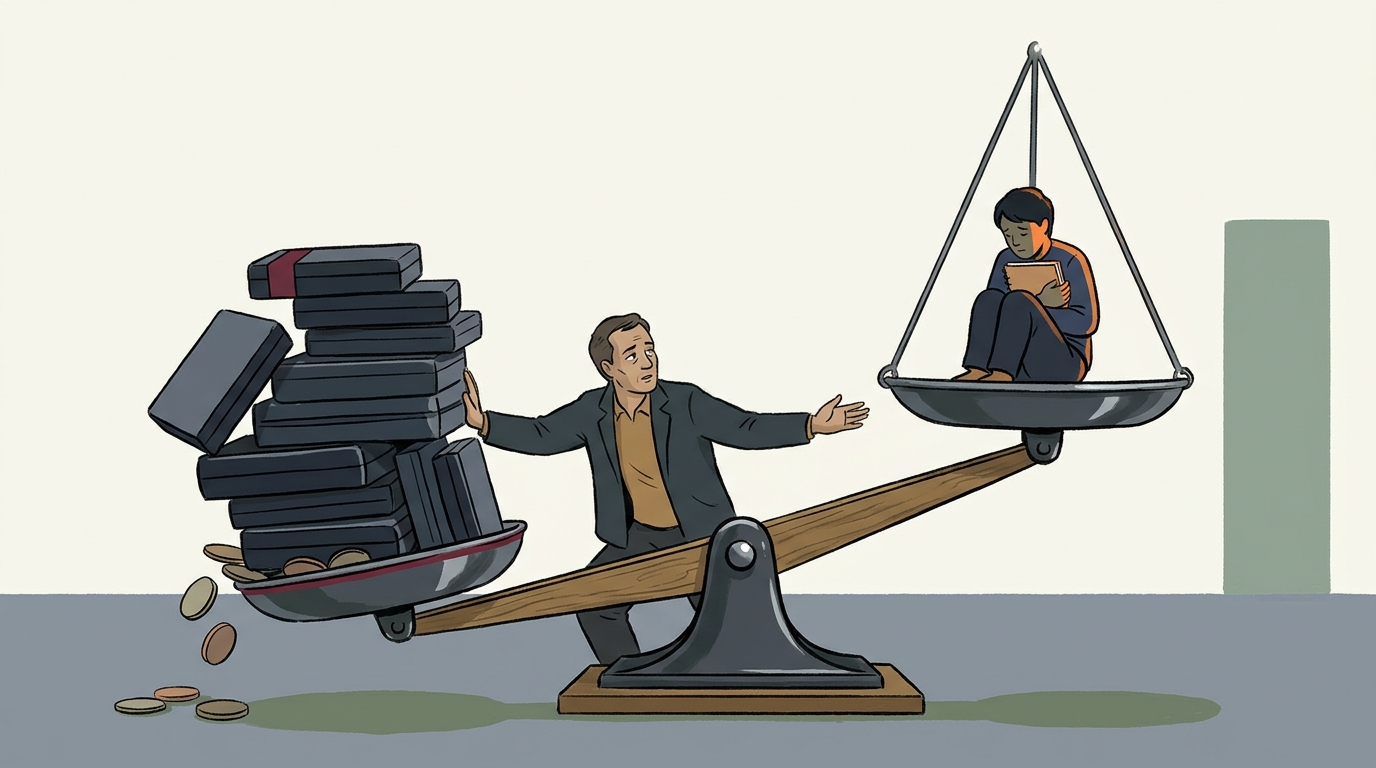
The hidden complexity. The voices missing from your decision space this week are the ones with the most leverage over it. Vendor terms — what the detection tool’s EULA permits, what the LMS integration logs — are setting the evidentiary standard in academic-integrity hearings without faculty input. Inside Higher Ed’s reporting on the myriad complex ways young people use AI shows student use has fragmented into dozens of task-specific patterns that no blanket policy captures. The acceleration is structural: model updates ship quarterly while curriculum committees meet twice a year — a temporal asymmetry Future Shock named decades before it had a name in higher ed. The faculty member writing rubrics this weekend is the load-bearing wall in a building no one funded to renovate.
Actionable Recommendations
Faculty Brief: Three Moves That Survive Contact With the Evidence
The week’s literature converges on an uncomfortable diagnostic: faculty are being asked to police a tool the institution licensed, using detection software the institution bought, against students the institution admitted partly on the promise of “AI-ready” graduates. The 2026 HEPI student survey finds genAI use now near-universal among UK undergraduates Student Generative Artificial Intelligence Survey 2026, while a Forbes summary of recent faculty polling reports 90% believe AI is weakening student learning 90% Of Faculty Say AI Is Weakening Student Learning: How … - Forbes. That gap is the working condition. These three recommendations are designed to be implemented inside it — without a course release, without a TA, and without pretending the contradiction is solved.
1. Replace your AI policy paragraph with a permitted-use matrix — before week three.
The failure this addresses. The dominant documented failure this week is not student cheating; it is policy vagueness. A faculty essay in Times Higher Education finds students explicitly asking for granular guidance, not blanket rules Students are asking for AI guidance, not just policy. The downstream cost of vagueness is visible in litigation: Adelphi University is currently being sued by a student accused of AI plagiarism on the basis of detector output the student disputes Adelphi accused a student of using AI to plagiarize. He … - Newsday. CalMatters’ reporting on AI detectors documents that institutions are paying millions for tools whose false-positive behavior remains unresolved Colleges pay millions for AI detectors that are flawed - CalMatters. A vague policy plus an unreliable detector is how a faculty member ends up as a deposition witness.
The alternative. A per-assignment matrix — three columns: prohibited / permitted with disclosure / required — applied to each deliverable in the syllabus. The MDPI assessment-redesign literature this week treats this as the minimum viable structure for authentic assessment in an AI environment Beyond Detection: Redesigning Authentic Assessment in an AI … - MDPI, and a parallel piece argues the design question has shifted from “did they use AI” to “what cognitive work does this assignment require” From Cognitive Necessity to Cognitive Choice: Higher Education Assessment and Learning in the Age of Generative AI.
Implementation. 1. Week 1 (90 minutes): list every graded artifact; assign each to one of the three columns. 2. Weeks 2–3: post the matrix, walk through it in class once, require a one-line AI-use statement on every submission. 3. By midterm: audit which column students actually used; revise where the matrix proved unworkable. 4. End of semester: keep the matrix as a working document for the next syllabus, not a compliance artifact.
Why this addresses the core tension. It moves the unit of judgment from the student’s character to the assignment’s design, which is the only variable you control. It also gives you defensible ground if a case escalates — better than detector output, which the CalMatters piece shows is not defensible.
Realistic outcome. No longitudinal data exists. The MDPI redesign literature is theoretical; the HEPI survey shows students want this; nobody has shown it improves learning outcomes. What it does, demonstrably, is reduce the number of disputes that reach the dean’s office.
2. Build one in-class, low-stakes oral component per unit — and stop treating it as remediation.
The failure this addresses. The Nature RCT this week reports AI tutoring outperforming in-class active learning on knowledge measures AI tutoring outperforms in-class active learning: an RCT … - Nature. Read carefully, that result is not a verdict against teaching — it is a verdict against take-home written work as the primary site of cognitive demonstration, since that is the work AI most easily substitutes for. Meanwhile, Inside Higher Ed documents the proliferation of student AI use into emotional and metacognitive scaffolding, not just task completion The Myriad Complex Ways Young People Use AI - Inside Higher Ed, and a Frontiers meta-analysis of genAI on learning outcomes finds effects highly conditional on task type Exploring the effect of GenAI on learning outcomes in higher education: A three-level meta-analysis.
The alternative. A short, ungraded-or-light-graded oral defense attached to each major written deliverable: three to five minutes, in class or office hours, “walk me through your second paragraph.” The FutureCampus analysis this week argues that academic staff are absorbing the cost of an assessment debate that was misframed as a detection problem rather than an evidence-of-learning problem Academic Staff Are Paying The Price For The Misframed …. Oral checks reframe it.
Implementation. 1. Week 1: pick one unit; designate the artifact that will get an oral component. 2. Weeks 2–6: schedule 3-minute slots; use a four-question rubric (one question on argument, one on evidence, one on a choice the student made, one on what they’d revise). 3. Midterm: expand to a second unit if the first held; contract if it did not. 4. End of semester: compare oral-defense performance against written grade for the same students; the gap is your diagnostic.
Why this addresses the core tension. It does not require detection. It does not require trust. It generates the evidence of learning the institution claims to be credentialing — which is the actual job.
Realistic outcome. Time cost is real: a 25-student section is roughly 90 minutes per oral round. There is no published outcome data on this specific format at scale. Future Shock’s framing of acceleration mismatch — that institutional cycles cannot match the rate of tool change — is doing real work here Future Shock: orals are slower, which is the point.
3. Teach the tool’s failure modes explicitly — and grade students on noticing them.
The failure this addresses. Faculty often respond to AI either by banning it or by assigning “use AI to draft, then revise” tasks that assume students can already evaluate model output. The week’s evidence suggests they cannot. A study on AI’s impact on student reading and critical thinking documents measurable declines in evaluation skill among heavy users The Impact of AI on Students’ Reading, Critical Thinking, and Problem …. A University of Chicago Data Science Institute essay argues that frictionless AI access itself reshapes how students think, in ways unfriction cannot easily reverse The Time Constraints of AI Access Could Change How We Think. And a working paper from CORE reframes student authorship as a hybrid practice that requires explicit instruction Writing with machines? Reconceptualizing student work in the age of AI.
The alternative. Treat AI literacy as a graded learning objective, not a syllabus disclaimer. Educator’s Technology published a question bank this week structured around critical AI literacy — bias, hallucination, training-data provenance, what the model cannot do 24 Critical AI Literacy Questions Every Teacher Should Ask Students. Pick five and embed them in one assignment.
Implementation. 1. Week 2: assign a “find the error” task — students prompt a model on course content, document one factual or interpretive failure, explain why it failed. 2. Weeks 4–8: repeat once per unit, escalating difficulty. 3. Midterm: grade improvement in failure-detection, not output quality. 4. End of semester: students should be able to articulate at least three category failures of the specific model they use.
Why this addresses the core tension. It accepts what the HEPI data shows — students are using these tools regardless — and converts use into the object of study. It also positions you against the vendor framing, which markets fluency and obscures failure.
Realistic outcome. No outcome data at scale. The pedagogical logic is sound; the longitudinal evidence is missing. State that to your students. It is itself a lesson in how this field currently works.
Supporting Evidence
What the Evidence Actually Says — and Where It’s Thin
Our dimensional analysis of this week’s education corpus (2,490 articles drawn from a 6,636-article weekly pull) surfaces patterns worth naming directly, because several of them cut against the consensus you’ll hear at your next assessment committee meeting.
Dimensional patterns
On evidence and inference. The corpus is unusually heavy on causal claims this week, and the claims point in opposite directions. A randomized controlled trial in Nature reports that AI tutoring outperforms in-class active learning on measured outcomes AI tutoring outperforms in-class active learning: an RCT. A three-level meta-analysis in Frontiers in Psychology reaches a more qualified verdict: GenAI effects on learning outcomes vary substantially by task type, scaffolding, and discipline Exploring the effect of GenAI on learning outcomes in higher education. Meanwhile, a Forbes-reported survey finds 90% of faculty believe AI is weakening student learning 90% Of Faculty Say AI Is Weakening Student Learning. These are not reconcilable through summary; they measure different things. The RCT measures performance on bounded tasks. The meta-analysis aggregates heterogeneous designs. The faculty survey measures perception. Treat them as three distinct evidentiary objects, not as a debate to be settled.
On concepts and assumptions. The dominant conceptual frame across our corpus is assessment redesign — the shift from detection to authentic assessment appears in multiple peer-reviewed and practitioner sources Beyond Detection: Redesigning Authentic Assessment in an AI Era, Authentic Assessment in the Age of AI, and From Cognitive Necessity to Cognitive Choice. The framing assumes faculty have the time, training, and institutional latitude to redesign. A counter-frame, that academic staff are absorbing the cost of a debate framed badly from above, surfaces in Academic Staff Are Paying The Price For The Misframed GenAI Assessment Debate. Both frames cite the same underlying problem; they disagree on who pays.
On point of view. Faculty and institutional voices dominate our corpus. Student voices appear, but mostly mediated — surveyed Student Generative Artificial Intelligence Survey 2026, profiled The Myriad Complex Ways Young People Use AI, or named in policy disputes Students are asking for AI guidance, not just policy. Disability-services and accessibility perspectives are present but narrow Personnaliser l’apprentissage pour les étudiants handicapés à l’aide de l’IA — and that source is a vendor training module, which is its own kind of evidence problem. Contingent faculty, graduate-student instructors, and the staff who actually run detection appeals are largely absent.
Discourse patterns
The two metaphors doing the most work this week are detection (catching, flagging, scoring suspicion) and redesign (rebuilding, authentic, integration). Detection metaphors dominate the litigation and tooling coverage Colleges pay millions for AI detectors that are flawed, Adelphi accused a student of using AI to plagiarize. Redesign metaphors dominate the pedagogy literature. The metaphor choice predicts the policy: detection framings lead to procurement; redesign framings lead to faculty labor. Both are real costs; neither is free.
Causal attribution in our corpus skews structural when describing failure (flawed detectors, mis-framed debates, vendor capture) and individual when describing success (one professor’s redesigned syllabus, one student’s responsible use). That asymmetry should make you cautious about generalizing the success stories.
Failure patterns visible in the corpus
The documented failures cluster in three categories. Detection-tool failures: false positives leading to academic-integrity proceedings against students who did not cheat Adelphi accused a student of using AI to plagiarize, and procurement of tools whose accuracy claims do not survive audit Colleges pay millions for AI detectors that are flawed. Surveillance-tool failures: K-12-adjacent monitoring systems flagging students in ways that produce privacy harms Programas de IA para monitorear a estudiantes tienen riesgos de privacidad. Pedagogical-design failures: assignments that AI trivializes, where the failure is upstream of the student Writing with machines? Reconceptualizing student work in the age of AI.
Gaps that should constrain your conclusions
We cannot tell you the long-term learning effects, because the corpus contains no longitudinal evidence past one academic term. We cannot tell you what happens to students wrongly accused, because settlement terms in cases like Adelphi’s are not public. We cannot tell you the actual labor cost of assessment redesign, because no source in our corpus measures faculty hours. And we have almost no evidence on AI in graduate research training — the 2026 AI Index Report tracks PhD pipeline data but not pedagogy.
Secondary tensions
Beyond the detection-versus-redesign argument, three tensions recur: (1) time asymmetry — model release cycles run quarterly while curriculum cycles run by the year The Time Constraints of AI Access Could Change How We Think, an acceleration mismatch Future Shock names directly; (2) guidance-versus-policy — students report wanting instruction, not rules Students are asking for AI guidance, not just policy; and (3) adoption framing — faculty technology-acceptance studies treat adoption as the dependent variable Faculty Adoption of AI-Assisted Teaching Tools in Chinese Higher Education, which presupposes adoption is the goal. It may not be.
References
- 2026 AI Index Report
- 24 Critical AI Literacy Questions Every Teacher Should Ask Students
- 90% Of Faculty Say AI Is Weakening Student Learning
- Academic Staff Are Paying The Price For The Misframed GenAI Assessment Debate
- Adelphi accused a student of using AI to plagiarize. He sued
- AI tutoring outperforms in-class active learning: an RCT
- Authentic Assessment in the Age of AI
- Beyond Detection: Redesigning Authentic Assessment in an AI Era
- Colleges pay millions for AI detectors that are flawed
- Faculty Adoption of AI-Assisted Teaching Tools in Chinese Higher Education
- From Cognitive Necessity to Cognitive Choice
- Future Shock
- outsmarting AI in the classroom
- Personnaliser l’apprentissage pour les étudiants handicapés à l’aide de l’IA
- positive effect of GenAI on learning outcomes in higher education
- Programas de IA para monitorear a estudiantes tienen riesgos de privacidad
- Student Generative Artificial Intelligence Survey 2026
- Students are asking for AI guidance, not just policy
- The Impact of AI on Students’ Reading, Critical Thinking, and Problem …
- the myriad complex ways young people use AI
- The Time Constraints of AI Access Could Change How We Think
- Writing with machines? Reconceptualizing student work in the age of AI